

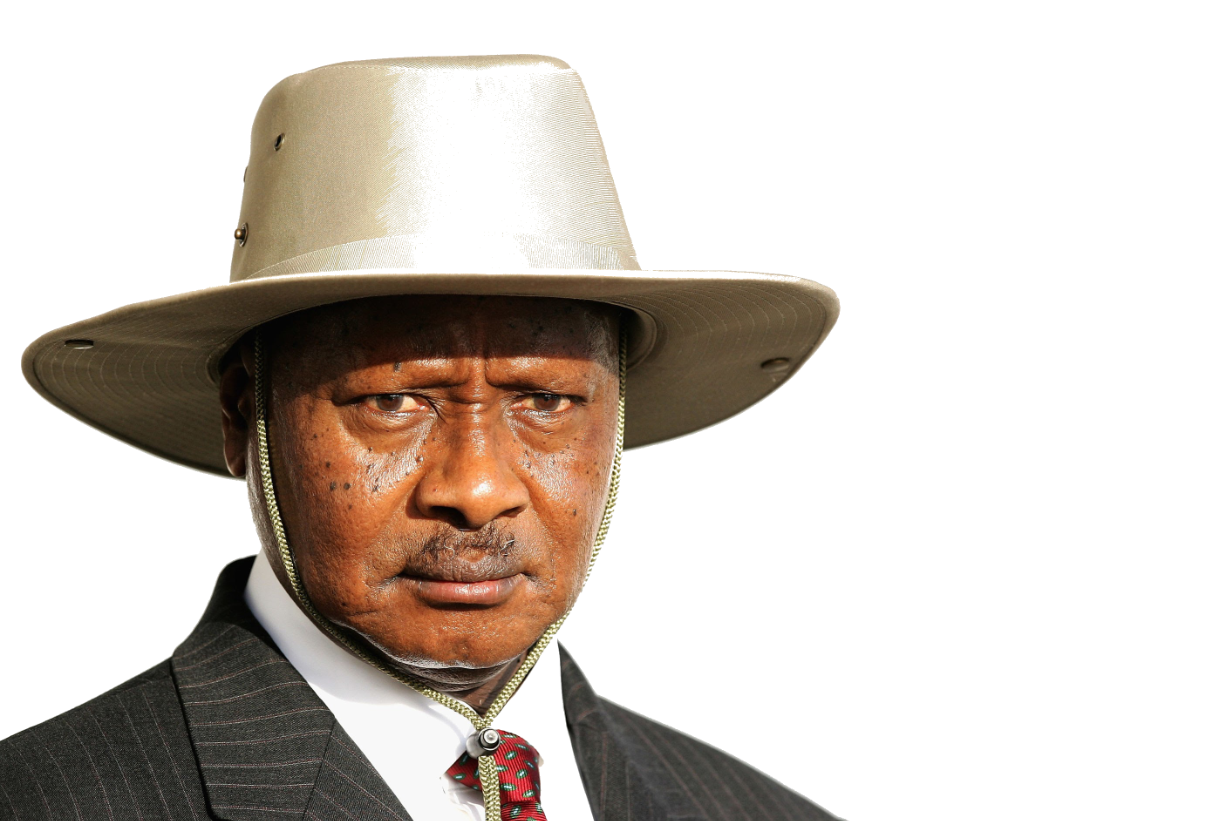

A secret document leaked by Rwanda’s state-owned English newspaper, The New Times, has conveyed the scale of sabre-rattling by Kigali and Kampala at the backend of the 1980s and, crucially, the extent to which the latter was prepared to go on the watch of President Juvénal Habyarimana.
The relationship between presidents Yoweri Museveni and Habyarimana was uniquely fraught at that tumultuous time, shaped by a deep mistrust and a commitment, through diplomatic manoeuvring, never to be caught unawares. This as the Museveni administration actively supported a Tutsi rebel movement—the Rwandan Patriotic Front (RPF)—to wrong-foot Habyarimana’s Hutu-dominated regime.
Despite diplomatic efforts growing in bursts of reform, crisis, and optimism, with renewed success being found in Habyarimana attending military ceremonies where Rwandan Tutsi officers—like Fred Rwigyema—who helped Museveni capture power in 1986 after a five-year guerrilla war were honoured, misgivings were obvious enough, at least in retrospect. Now, a leaked classified intelligence document captures the magnitude of destruction the Habyarimana administration was prepared to undertake.
“Through specialised private organisations, we should consider making an attempt on the life of Museveni. It is not impossible to have him eliminated. That is why such a plan should be devised,” the document reads in part, adding, “Indeed, the cost of carrying out this plan would be far lower than the cost of the war that Museveni has inflicted upon us. Military intelligence services could conduct an in-depth study of such a plan.”
Thawing out
In the years after Museveni’s National Resistance Army (NRA) toppled a military junta led by Tito Okello, Kampala adopted a more accommodating tone with Kigali if only to allow Rwandan Tutsi refugees in Uganda to return to their native country with the accompanying trauma of reprisal blunted. It is a promise that Habyarimana was not prepared to make, a fact that the top secret document underscores.
“From very diverse sources, we have learned that a large-scale attack is in the process of being prepared in Uganda, an attack that would be launched at the end of President Museveni’s term as President of the OAU. Indeed, President MUSEVENI, whose army—of a personal character—currently numbers 60,000 men, is said to have made 20,000 men available to the Inkontanyi,” the document, which generously uses the aforementioned name (Inkotanyi is Kinyarwanda for determined fighters) adopted by the RPF, states, adding, “These 20,000 men are reportedly currently regrouped in southern Uganda, where they are undergoing training and supervising the Inkotanyi troops, but above all they are said to be in the process of familiarising themselves with new weaponry recently acquired by the Inkotanyi.”
Museveni served as Chairman of the Organisation of African Unity (OAU) from July 1990 to June 1991. Conventional wisdom suggests that Uganda’s ninth president was largely aware of the RPF’s 1990 invasion of Rwanda. When the RPF invaded Uganda’s southwestern neighbour, Habyarimana confronted Museveni with the accusation that the act took place with his blessing, perhaps at his insistence. The leaked document captures how Habyarimana’s fears imposed a very specific form of conviction.
“There is no longer any doubt that the war currently being waged by the Inkotanyi is a war of attrition. It is clearly evident that their actions aim to sustain a conflict that exhausts and ruins us, while waiting for a large-scale operation,” the intelligence brief discloses.
“Furthermore, among the Inkotanyi (as evidenced by intercepted messages), one notes a certain morale and an unusual calm that suggest they have received a favourable promise from Museveni. More organised recruitment is taking place in Burundi under the passive watch of the Burundian Government. It would be naïve to believe that the Government of Burundi is not cooperating with the Inkotanyi, notably through its intelligence services,” it adds.
No love lost
The document further shows how the path to nip the RPF in the bud was likely to be rocky. “The major problem hindering our forces in the field is that they cannot pursue the Inkotanyi onto Ugandan territory, while from there the latter fire on our positions. In the current state of affairs, it would be appropriate to identify the positions of the Inkotanyi beyond the border (training centres, logistical centres, etc.) and attempt to destroy them through raids. These raids would be supported by a large campaign on our part highlighting internal struggles within the ranks of the Inkotanyi. Such raids would prevent the Inkotanyi from organising themselves near our territory.”
Eventually, on the evening of 6 April 1994, an aircraft carrying Habyarimana and his Burundian counterpart, Cyprien Ntaryamira, both Hutu, was downed by a surface-to-air missile. This provided the spark—amidst smoldering embers that never really died—for the Rwandan genocide in which up to one million people—primarily Tutsi, along with moderate Hutu—are thought to have been killed by Hutu militias and state forces in a 100-day systematic purge.
Below is the leaked classified intelligence document in full.
A. MILITARY DOMAIN
1. Possible attack by UGANDA
From very diverse sources, we have learned that a large-scale attack is in the process of being prepared in UGANDA, an attack that would be launched at the end of President MUSEVENI’s term as President of the OAU. Indeed, President MUSEVENI, whose army—of a personal character—currently numbers 60,000 men, is said to have made 20,000 men available to the INKOTANYI. These 20,000 men are reportedly currently regrouped in southern UGANDA, where they are undergoing training and supervising the INKOTANYI troops, but above all they are said to be in the process of familiarising themselves with new weaponry recently acquired by the INKOTANYI.
After cross-checking all this information, the following elements emerge, which call for these reports to be taken seriously:
– There is no longer any doubt that the war currently being waged by the INKOTANYI is a war of attrition. It is clearly evident that their actions aim to sustain a conflict that exhausts and ruins us, while waiting for a large-scale operation.
Furthermore, among the INKOTANYI (as evidenced by intercepted messages), one notes a certain morale and an unusual calm that suggest they have received a favourable promise from MUSEVENI.
– More organised recruitment is taking place in BURUNDI under the passive watch of the Burundian Government. It would be naïve to believe that the Government of BURUNDI is not cooperating with the INKOTANYI, notably through its intelligence services.
– Sabotage actions on Ugandan territory
The major problem hindering our forces in the field is that they cannot pursue the INKOTANYI onto Ugandan territory, while from there the latter fire on our positions. In the current state of affairs, it would be appropriate to identify the positions of the INKOTANYI beyond the border (training centres, logistical centres, etc.) and attempt to destroy them through raids. These raids would be supported by a large campaign on our part highlighting internal struggles within the ranks of the INKOTANYI. Such raids would prevent the INKOTANYI from organising themselves near our territory.
– Destabilization of MUSEVENI
Through specialised private organisations, we should consider making an attempt on the life of MUSEVENI. It is not impossible to have him eliminated. That is why such a plan should be devised. Indeed, the cost of carrying out this plan would be far lower than the cost of the war that MUSEVENI has inflicted upon us. Military intelligence services could conduct an in-depth study of such a plan.